Media Library
In our media library you will find our news archive, publications by our scientists, flyers on various topics, clips on our core competencies and the Paper Awards.
Our new image brochure
Please swipe to browseDownload of the brochure
Our flyers
Publications
December 2025
Usage and limitations of neuroglial biomarkers NfL and GFAP in urine as non-invasive disease markers in multiple sclerosis
NfL and GFAP in blood are emerging as important biomarkers in MS. A urine-based assay could provide a simpler, non-invasive alternative; however, limited biomarker transfer into urine may pose a major challenge. This study aimed to evaluate the detectability and diagnostic potential of urinary and serum NfL and GFAP for distinguishing MS patients from healthy controls.
November 2025
Heterologous ORFV–Ad26 vaccination broadens antibody breadth and amplifies cellular immunity against SARS-CoV-2 spike
The durability of vaccine-induced immunity is often limited by waning responses, antigenic drift, and anti-vector immunity, highlighting the need for innovative vaccination strategies. Heterologous prime–boost approaches can help overcome these barriers by exploiting the complementary strengths of distinct platforms.
November 2025
Gap Junctional Communication Required for the Establishment of Long-Term Robust Ca2+ Oscillations Across Human Neuronal Spheroids and Extended 2D Cultures
Synchronized oscillatory fluctuations in intracellular calcium concentration across extended neuronal networks represent a functional indicator of connectivity and signal coordination. In this study, a model of human immature neurons (differentiated from LUHMES precursors) has been used to establish a robust protocol for generating reproducible intracellular Ca2+ oscillations in both two-dimensional monolayers and three-dimensional spheroids
October 2025
Plug and Play Multi-Organ Chips: Integrated µGaskets for the Facile and Reversible Connection of Individual Organ-on-Chip Modules
Multi-organ-chip (MOC) models provide a plethora of auspicious opportunities to replace current in vitro and in vivo models for a more systemic investigation of human (patho-)physiology for drug development and personalized medicine.
October 2025
Differential Responses of Human iPSC-Derived Microglia to Stimulation with Diverse Inflammogens
Human microglia are central regulators and actors in brain infections and neuro-inflammatory pathologies. However, access to such cells is limited, and studies systematically mapping the spectrum of their inflammatory states are scarce.
October 2025
Polyelectrolyte Multilayer Coatings As a Tunable Tool to Control Inflammatory Response to Biomaterials in Vitro
The immune response to implanted medical devices can impact their performance and longevity in the body. Instead of designing implants to produce the desired immune responses, this might more easily be achieved with the use of surface modification technology, which can alter the biological profile of the implant without compromising function or performance.
NMI Best Paper Awards
Since 2021, the NMI, together with its Board of Trustees, has awarded a special prize to young scientists once a year for the best publication. You are welcome to read the award-winning publications.



NMI Clips

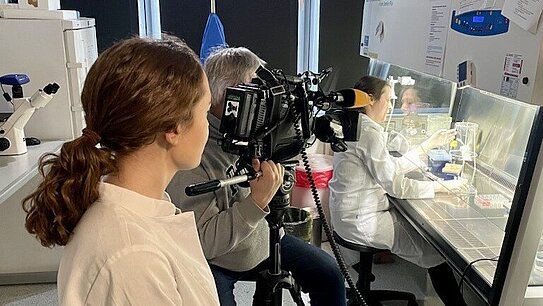
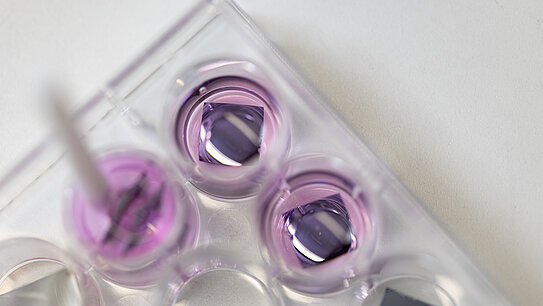
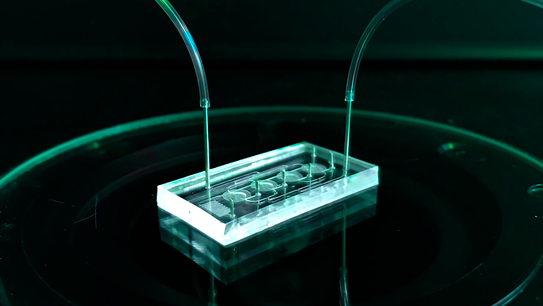
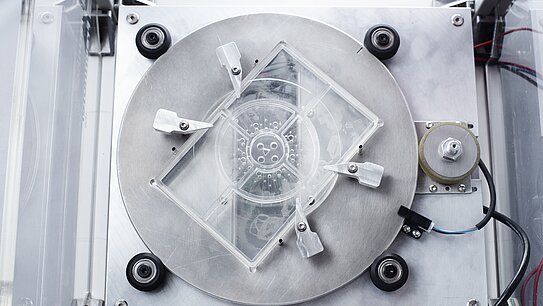
Reports about the NMI


NMI Natural and Medical Sciences Institute
at the University of Tübingen
Markwiesenstraße 55, 72770 Reutlingen
Tel.: +49 7121 51530-0
Mail:
info@nmi.de
Follow us now