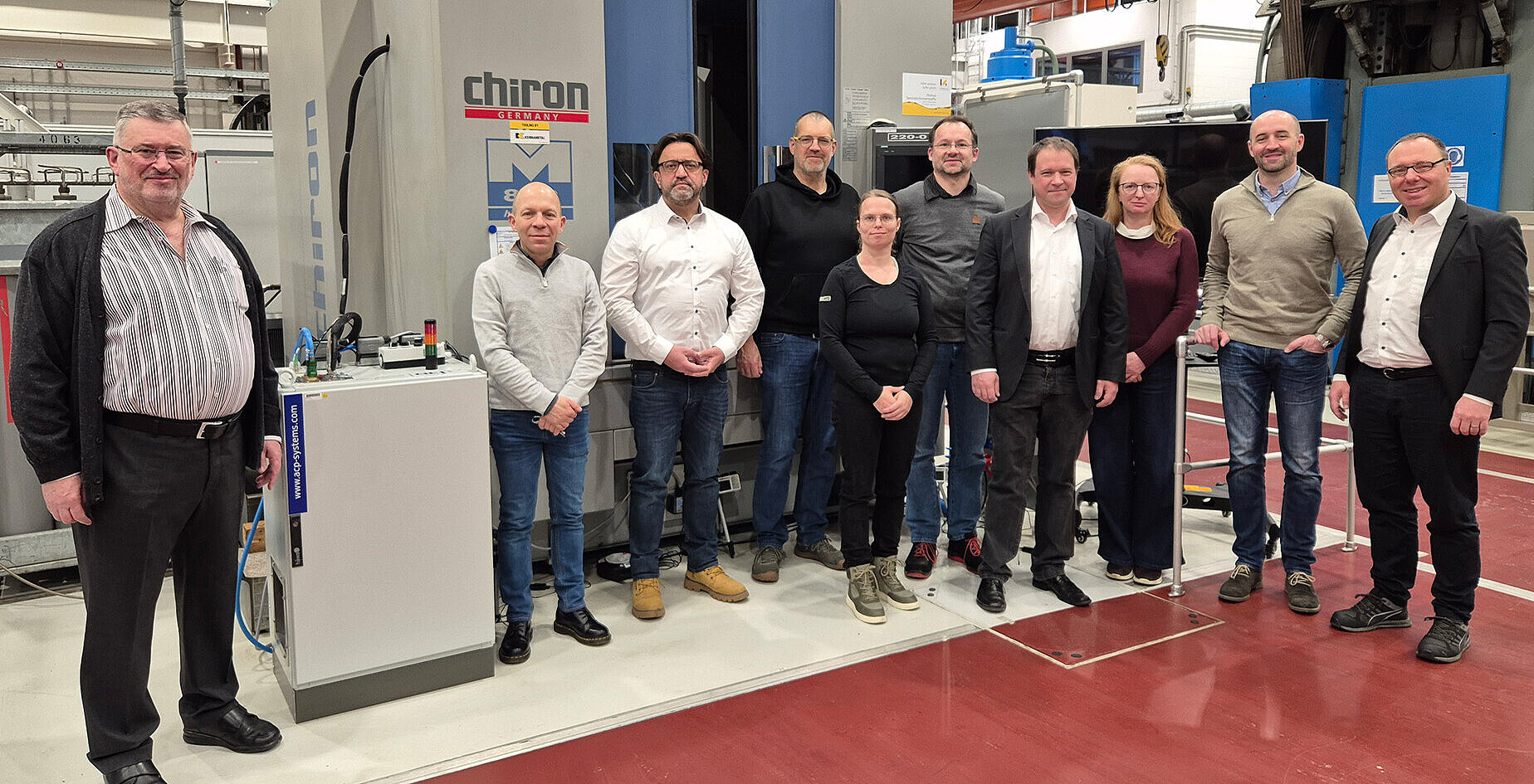
Project launch: New process set to revolutionize the manufacture of medical components
The research project “EProKry—Efficient Process Chains for Residue-Free Manufacturing of Medical Components Using Cryogenic Machining Technologies” has been launched at the Faculty of Automotive and Mechanical Engineering at West Saxon University of Applied Sciences Zwickau (WHZ). As a project partner, the NMI is contributing its expertise in cleanliness assessment and material characterization.
When medical devices are used, their cleanliness is of paramount importance. The current manufacturing process for these components requires considerable subsequent cleaning efforts to eliminate manufacturing-related contamination. With the help of new process chains, this two-year research project aims to enable clean manufacturing through the use of cryogenic cooling. This will drastically reduce the current downstream and costly cleaning processes.
Against the backdrop of an aging society, particularly in Germany, and the associated increasing demand for instruments, implants, and components for medical devices, the innovations targeted here for efficient clean manufacturing are of great importance.
Four small and medium-sized enterprises (SMEs) and WHZ as a research partner are jointly developing plant and process technology to implement the newly planned cryogenic process chain and will subsequently transfer this to a real production environment. The consortium is supported by associated partners such as the market-leading medical company B. Braun SE/Aesculap, the machine manufacturer Chiron Group SE, and the NMI.
Dr. Dagmar Martin is involved in the project on behalf of the NMI. She contributes her many years of expertise in cleanliness assessment and material characterization. Dagmar Martin will continuously check that the surfaces are residue-free, as the aim is to avoid the use of lubricants. The NMI is an associated partner in the project.
Source: Press release from the West Saxon University of Applied Sciences Zwickau dated January 30, 2026, supplemented