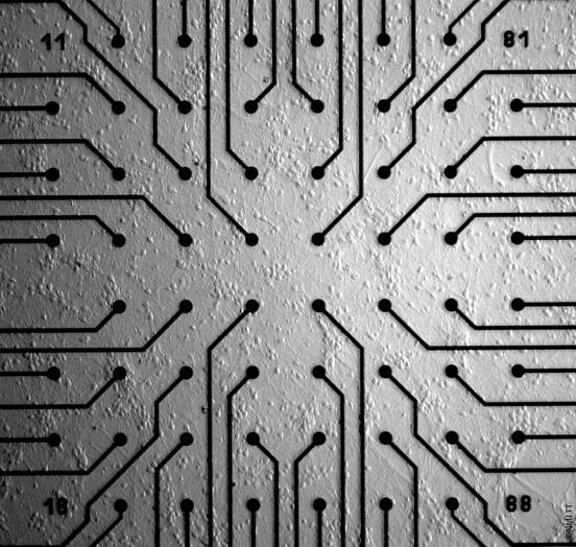
MEA recordings
Next Generation Cellular and Organotypic Assays
Senior Principal Scientist
MEA (microelectrode array) provides extracellular recordings with optional optical or electrical stimulation
It is performed on electrogenic tissue on top of substrate-integrated electrodes.
MEA has several advantages over other methods of electrophysiology:
- Information on the network level
- non-invasive
- long-term recordings, cells can be cultured for days or weeks
- "holistic" ion channel interactions
Application
- Safety pharmacology (convulsive effects on neurons, cardiac arrhythmias on cardiac cells)
- Neurotoxicity; neuronal modulation; LTP (long-term potentiation)
- Neurodegeneration (organotypic cultivation on brain slices/retina)
- MoA connection
- Diabetes research
- Retina research
MEA recordings can be performed with various models, including neurons, cardiomyocytes, brain slices, iPSC-derived neurons/cardiomyocytes, heart slices, etc. Contact us for more information.

NMI Natural and Medical Sciences Institute
at the University of Tübingen
Markwiesenstraße 55, 72770 Reutlingen
Tel.: +49 7121 51530-0
Mail:
info@nmi.de
Follow us now